-
Shop
- Advanced Technologies
- AI Skills
- Apple Accessories
- Bathroom
- Best-Sellers
- Car Accessories
- Car Buying & Ownership
- Confidence
- Dating & Social Skills
- Digital Resources
- AI & Technology
- Beauty
- Electronics & Technology
- Emotional Intelligence
- Home Styling & Organization
- Kitchen & Recipes
- Mindfulness
- Mindset
- Online Business
- Parenting & Child Development
- Personal Style & Fashion
- Pet Lifestyle & Wellness
- Positive Thinking
- Productivity
- Self Confidence
- Sleep Improvement
- Smart Life with AI
- Stress Management & Relaxation
- Wellness
- Yoga & Mind-Body Practices
- Education & Learning
- Family & Parenting
- Fashion
- Furniture
- Gadgets
- Health & Beauty
- Health & Wellness
- Home & Garden
- Home Decor
- Home Electronics
- Jewelry
- Kids & Babies
- Kitchen
- Legend Footwear Brands Collection
- Lighting
- Nike
- Patio, Lawn & Garden
- Personal Growth
- Pet Care
- Pet Supplies
- Pets
- Smart Amazon Shopping
- Sport & Outdoors
- Travel
- Travel & Adventure
- Wealth
- Wealth Building
- Budgeting & Saving
- Cryptocurrency Investing
- Debt Management
- Entrepreneurship & Business Growth
- Family Finance & Budgeting
- Financial Independence
- Financial Mindset & Psychology
- Financial Planning
- Frugal Living & Expense Hacks
- Goal Setting
- High-Income Skills
- Investing Basics
- Leadership
- Motivation
- Networking & Mentorship
- Passive Income Strategies
- Real Estate Investing
- Side Hustles
- Stock Market Investing
- Popular
- Best deals
Split Flexibility Plan: Safer Front & Middle Split Progress
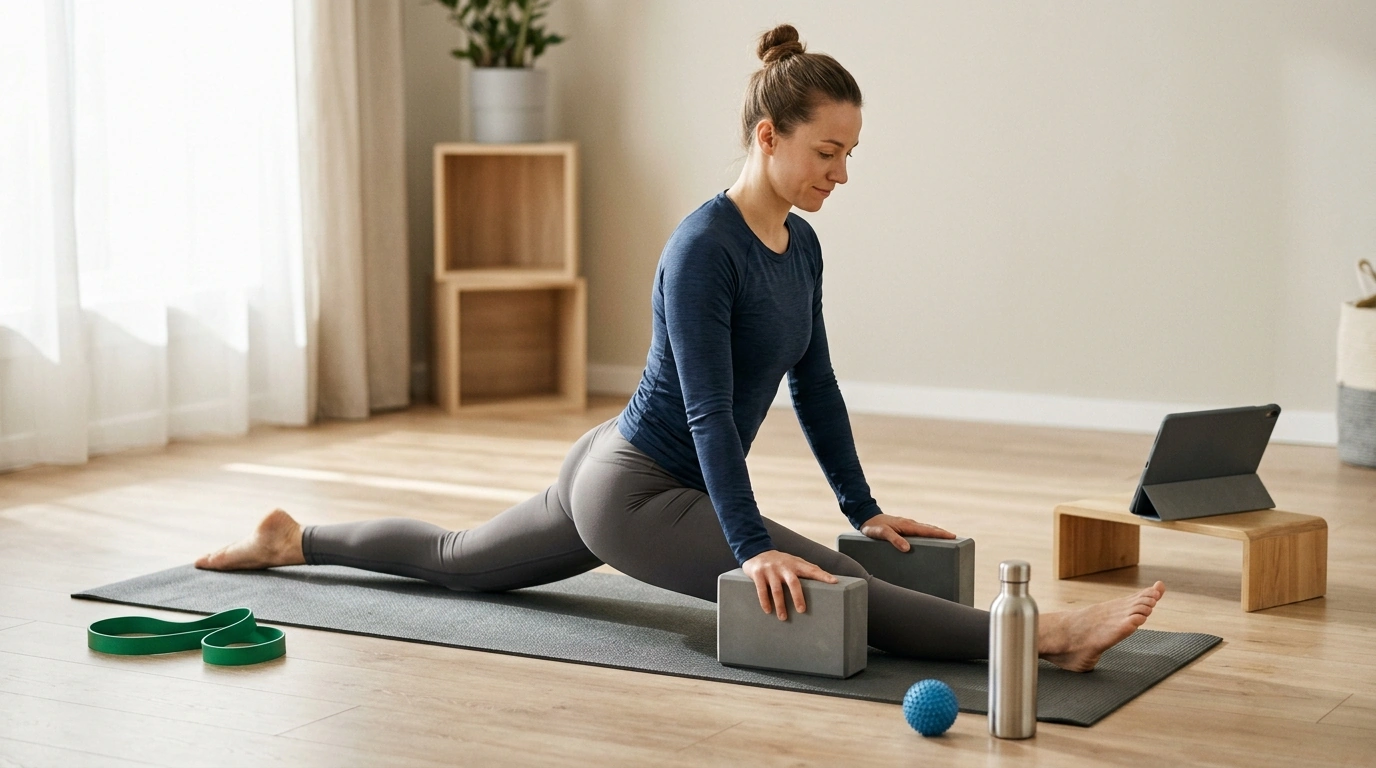
Improving split flexibility is less about forcing range and more about a repeatable process: warming up well, choosing the right stretches, using progressive holds, and tracking recovery. The goal is to increase range while keeping your hips, hamstrings, and groin feeling stable—not irritated. Below is a safe, structured approach you can repeat week after week, plus a practical way to turn that structure into an easy routine with guided sequences and built-in personalization.
What “split flexibility” actually requires
Splits look like a single position, but they’re really a teamwork problem across multiple tissues and joint actions. If one piece is lagging, the whole shape stalls.
- Front splits: the rear leg typically needs more hip flexor length, while the front leg needs hamstring length. Either side can be the limiter depending on your structure and technique.
- Middle splits: adductor length and tolerance (inner thighs) matter, along with how your hips handle internal/external rotation in the bottom range.
- Active flexibility matters: being able to lift and control your leg in the new range often predicts safer progress than passive “pushing down” into a stretch.
- Consistency beats intensity: moderate sessions repeated across weeks usually outperform occasional max-effort sessions.
- Daily readiness changes: temperature, fatigue, stress, and sleep can alter range. Use checkpoints over time rather than judging a single “bad” day.
Safety first: when to stretch and when to back off
Splits training should feel challenging, but not threatening. Your nervous system will protect you if it senses danger—often showing up as pinching, cramping, or guarding.
- Aim for a strong stretch sensation without sharp pain, joint pinching, numbness, or tingling.
- Avoid aggressive end-range bouncing. Choose controlled holds and gradual depth changes.
- Prioritize alignment: square the hips for front split practice and resist twisting the pelvis to “fake” depth.
- If you’re recovering from injury, have hypermobility concerns, or feel persistent hip/groin pain, get guidance from a qualified clinician before deep split training.
General flexibility guidance from trusted organizations also emphasizes gradual progression and avoiding painful stretching, including resources from Mayo Clinic and ACSM.
A step-by-step session flow that builds splits faster
When splits progress feels random, it’s often because sessions skip steps—especially warm-up and strength-in-range. Use this flow to make your flexibility work more repeatable.
1) Warm-up (5–10 minutes)
Raise tissue temperature with light cardio, then add dynamic leg swings and hip circles. Warmer tissue generally tolerates stretch better and feels less “stuck.”
2) Prep drills (5 minutes)
Activate glutes and brace the core to stabilize the pelvis. This helps you keep your hips square and reduces the urge to compensate with low-back extension.
3) Main flexibility work (10–20 minutes)
Use targeted sequences for hip flexors, hamstrings, and adductors with progressive holds (explained below). Keep intensity at a level you can repeat.
4) Strength-in-range (5–10 minutes)
Add short sets such as split-stance isometrics, controlled leg lifts, or slow eccentrics. This teaches your body to “own” the new range rather than treat it as a temporary stretch.
5) Cool-down (2–5 minutes)
Finish with gentle breathing and low-intensity stretches to reduce guarding and bring overall tension down.
Example weekly plan (adjust intensity to recovery)
| Day | Focus | Main work | Time |
|---|---|---|---|
| Mon | Front split (left) | Hip flexor + hamstring sequence, 2–3 rounds | 20–30 min |
| Tue | Middle split | Adductors + pancake progression, 2–3 rounds | 20–30 min |
| Wed | Active mobility | Leg lifts, split-stance isometrics, light stretches | 15–25 min |
| Thu | Front split (right) | Hip flexor + hamstring sequence, 2–3 rounds | 20–30 min |
| Fri | Middle split (light) | Gentle holds + controlled pulses (no bouncing) | 15–25 min |
| Sat | Mixed | Short session + technique check + photos/measure | 15–25 min |
| Sun | Rest | Walk, easy mobility only | — |
Techniques that tend to unlock progress
- Longer holds with breathing: 30–60 seconds per stretch can reduce protective tension when done calmly. Think “steady exhale,” not “fight for depth.”
- Contract-relax (PNF-style): a gentle contraction for 5–10 seconds followed by a controlled exhale into a slightly deeper position. (For background reading, see research summaries on PubMed.)
- Split-specific supports: blocks, bolsters, or folded towels let you hold better alignment (especially square hips) without collapsing or twisting.
- Micro-progression: add a little time, an extra set, or a small depth change—then stop while it still feels repeatable.
Personalizing the plan to your body and goals
How the Split Ready, Faster eBook supports a real routine
If you want a plan you can follow without constant guesswork, Split Ready, Faster: Ultimate eBook to Increase Flexibility for Splits – Step-by-Step Guide, Stretching Techniques & Personalized AI Prompts turns the session flow into guided sequences you can repeat consistently.
For anyone using digital training plans on a phone or laptop, comfort matters too. Screen Headaches Solved – A Practical Digital Guide to Headaches From Screen Overuse, Eye Strain Relief & Smart Screen Habits can help make longer reading sessions easier to tolerate, especially if eye strain or tension headaches derail consistency.
Getting better results with fewer setbacks
FAQ
How long does it usually take to get a full split?
Timelines vary widely based on starting range, age, training history, and how consistently you train. Noticeable progress often shows up over weeks, while a full split can take months for many people; track measurable milestones (block height or distance to floor) rather than chasing a single deadline.
Is it safe to stretch for splits every day?
It can be safe to do light, controlled work frequently, but daily max-effort stretching often backfires. Alternate intensity, keep recovery-day sessions gentle, and back off if you notice joint pain, pinching, numbness, or tingling.
What should be felt during split stretching—stretch or pain?
A strong stretch sensation is normal, but sharp pain, pinching, numbness, or tingling is a signal to stop and adjust depth or alignment. When pain shows up, reduce range, add support under the hips, and rebuild gradually.
















Leave a comment