-
Shop
- Advanced Technologies
- AI Skills
- Apple Accessories
- Armani
- Bathroom
- Best-Sellers
- Calvin Klein
- Car Accessories
- Car Buying & Ownership
- Confidence
- Dating & Social Skills
- Digital Resources
- AI & Technology
- Beauty
- Electronics & Technology
- Emotional Intelligence
- Home Styling & Organization
- Kitchen & Recipes
- Mindfulness
- Mindset
- Online Business
- Parenting & Child Development
- Personal Style & Fashion
- Pet Lifestyle & Wellness
- Positive Thinking
- Productivity
- Self Confidence
- Sleep Improvement
- Smart Life with AI
- Stress Management & Relaxation
- Wellness
- Yoga & Mind-Body Practices
- Education & Learning
- Family & Parenting
- Fashion
- Furniture
- Gadgets
- Health & Beauty
- Health & Wellness
- Home & Garden
- Home Decor
- Home Electronics
- Jewelry
- Kids & Babies
- Kitchen
- Legend Footwear Brands Collection
- Lighting
- Luxury Brands Collection
- Nike
- Patio, Lawn & Garden
- Personal Growth
- Pet Care
- Pet Supplies
- Pets
- Smart Amazon Shopping
- Sport & Outdoors
- Travel
- Travel & Adventure
- Wealth
- Wealth Building
- Budgeting & Saving
- Cryptocurrency Investing
- Debt Management
- Entrepreneurship & Business Growth
- Family Finance & Budgeting
- Financial Independence
- Financial Mindset & Psychology
- Financial Planning
- Frugal Living & Expense Hacks
- Goal Setting
- High-Income Skills
- Investing Basics
- Leadership
- Motivation
- Networking & Mentorship
- Passive Income Strategies
- Real Estate Investing
- Side Hustles
- Stock Market Investing
- Popular
- Best deals
Toddler Confidence: Small Steps That Build Big Courage
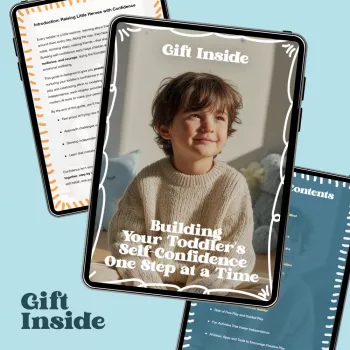
Building Toddler Self-Confidence One Step at a Time
Toddler confidence grows through small, repeatable experiences: being understood, trying something slightly hard, and feeling capable afterward. A steady mix of positive communication, play-based learning, and age-appropriate independence helps children build courage without pressure or perfectionism. The goal isn’t a fearless toddler—it’s a toddler who trusts they can try, recover, and try again.
What self-confidence looks like in toddlers
Confidence at ages 1–3 often shows up in ordinary moments, not big speeches or dramatic “bravery.” Look for these everyday signs:
- Willingness to try new tasks with support (putting on shoes, stacking blocks, greeting a new adult).
- Healthy protest and preferences (“No,” “Mine,” or “I do it”) paired with recovery after big feelings.
- Curiosity and persistence: returning to a toy or skill after a pause.
Some toddlers benefit from extra scaffolding for confidence when you notice patterns like avoiding play, intense frustration very quickly, frequent “I can’t,” or shutting down. Those are signals to shrink the challenge and strengthen connection first. If you’d like a research-backed snapshot of typical toddler development and support strategies, Zero to Three’s toddler development resources are a helpful reference point.
The “one-step” mindset: building courage without pressure
When toddlers resist, stall, or melt down, it’s often because the task feels too big. A “one-step” approach keeps progress moving while protecting the relationship.
- Aim for the next smallest step rather than the full skill (one arm in the sleeve, not the whole jacket).
- Keep challenges in the “just right” zone: slightly difficult, not overwhelming.
- Use short practice windows (2–5 minutes) and return later to prevent power struggles.
- Track progress by effort and strategies, not outcomes or speed.
Think of confidence like stacking blocks: one steady block at a time builds a tower that can handle wobbles.
Positive communication that strengthens a toddler’s inner voice
The words toddlers hear repeatedly become the tone of their inner narrator. Descriptive, calm, specific language helps them learn: “I can figure things out” and “big feelings are survivable.”
- Describe what is seen (“You kept trying”) instead of labeling (“You’re so smart”) to promote persistence.
- Reflect feelings first (“You’re mad it fell”) before coaching (“Let’s try again”) to reduce shutdown.
- Offer limited, real choices to build autonomy (“Red cup or blue cup?”).
- Replace vague praise with specific feedback tied to effort, patience, or problem-solving.
- Use connection before correction: get close, name the goal, then set the limit calmly.
Everyday phrases that build confidence
| Moment | Instead of | Try this | Why it helps |
|---|---|---|---|
| Struggling with a puzzle | “It’s easy—just do it.” | “This one is tricky. Want a hint or one more try?” | Normalizes challenge and gives control over help. |
| Refuses to dress | “Stop being difficult.” | “You want to do it yourself. You can start the zipper; I’ll hold the bottom.” | Supports independence with shared success. |
| Spills or breaks something | “Look what you did!” | “Oops—spills happen. Let’s get a cloth together.” | Protects self-worth and builds repair skills. |
| Big tantrum | “Calm down right now.” | “You’re really upset. I’m here. When you’re ready, we’ll breathe together.” | Co-regulation builds emotional confidence. |
| Asks for help immediately | “You can do it—go away.” | “I’ll watch first. Try one step, then ask again.” | Encourages initiative without removing support. |
Warm, responsive back-and-forth builds a child’s “I matter and I can” foundation. Harvard’s Center on the Developing Child explains why these serve-and-return interactions are so powerful for learning and resilience.
Play-based learning that quietly trains confidence
Play is low-stakes practice. It lets toddlers rehearse bravery, problem-solving, and leadership without the pressure of “doing it right.”
- Pretend play builds competence through roles: “chef,” “doctor,” “builder,” “helper.”
- Open-ended toys (blocks, scarves, cardboard, figures) invite experimentation without a “wrong” way.
- Skill ladders: start with easy wins (2 blocks) and gradually raise difficulty (bridge, tower, pattern).
- “Sportscaster talk” during play: narrate effort, patience, and attempts without directing every move.
- Mini-challenges that end in success: scavenger hunts, obstacle courses, matching games.
Independence routines that make toddlers feel capable
For more toddler-age guidance on routines, limits, and encouragement, the CDC’s positive parenting tips for toddlers offer practical examples.
Handling mistakes, sibling comparisons, and setbacks
A simple weekly plan: tiny wins that add up
Practical guide for step-by-step confidence building
If you’d like a ready-to-follow reference for tough moments (dressing battles, transitions, tantrums, sharing) that still keeps the focus on tiny, repeatable steps, Building Your Toddler’s Self-Confidence One Step at a Time – Practical Parenting eBook Guide pulls the “one-step” approach into simple routines, scripts, and examples you can revisit during new phases or regressions.
Supporting a toddler can also be draining; if screen time is part of work or late-night decompression, Screen Headaches Solved – A Practical Digital Guide can help parents build smarter screen habits and reduce eye strain—so patience is easier to access when it counts.
FAQ
How can confidence be built without creating praise dependence?
Use descriptive feedback that highlights effort and strategies (“You tried a new way”) instead of constant labels (“You’re the best”). Reflect feelings, notice persistence, and let the outcome be secondary to the trying.
What if a toddler melts down whenever something is hard?
Lower the task to a single doable step, help the body calm first, then offer a choice for support level (a hint or hands-on help). Practice in short bursts and prioritize “retry” moments over finishing the whole task.
At what age should toddlers start doing things independently?
Independence often begins in small ways between 18–36 months, but timing varies widely. Choose safe tasks, set up the environment for success, and build consistency rather than focusing on a specific age.
Recommended for you


New Balance Smart Casual: Easy Outfit Formulas
Sep 25, 2026













Leave a comment