-
Shop
- Advanced Technologies
- AI Skills
- Apple Accessories
- Armani
- Bathroom
- Best-Sellers
- Calvin Klein
- Car Accessories
- Car Buying & Ownership
- Confidence
- Dating & Social Skills
- Digital Resources
- AI & Technology
- Beauty
- Electronics & Technology
- Emotional Intelligence
- Home Styling & Organization
- Kitchen & Recipes
- Mindfulness
- Mindset
- Online Business
- Parenting & Child Development
- Personal Style & Fashion
- Pet Lifestyle & Wellness
- Positive Thinking
- Productivity
- Self Confidence
- Sleep Improvement
- Smart Life with AI
- Stress Management & Relaxation
- Wellness
- Yoga & Mind-Body Practices
- Education & Learning
- Family & Parenting
- Fashion
- Furniture
- Gadgets
- Health & Beauty
- Health & Wellness
- Home & Garden
- Home Decor
- Home Electronics
- Jewelry
- Kids & Babies
- Kitchen
- Legend Footwear Brands Collection
- Lighting
- Luxury Brands Collection
- Nike
- Patio, Lawn & Garden
- Personal Growth
- Pet Care
- Pet Supplies
- Pets
- Smart Amazon Shopping
- Sport & Outdoors
- Travel
- Travel & Adventure
- Wealth
- Wealth Building
- Budgeting & Saving
- Cryptocurrency Investing
- Debt Management
- Entrepreneurship & Business Growth
- Family Finance & Budgeting
- Financial Independence
- Financial Mindset & Psychology
- Financial Planning
- Frugal Living & Expense Hacks
- Goal Setting
- High-Income Skills
- Investing Basics
- Leadership
- Motivation
- Networking & Mentorship
- Passive Income Strategies
- Real Estate Investing
- Side Hustles
- Stock Market Investing
- Popular
- Best deals
Find Your Calm: 10-Minute Reset + 7-Day Anxiety Plan
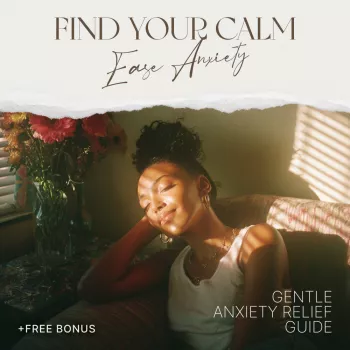
Find Your Calm: Simple Steps to Ease Anxiety and Relax Naturally
Busy days, constant notifications, and a mind that won’t stop scanning for “what ifs” can leave your nervous system stuck on high alert. Our team created Find Your Calm as a gentle, practical guide to help lower the volume on anxious thoughts and bring your body back toward steadier ground—without needing a perfect schedule, special equipment, or big lifestyle overhauls. The goal stays simple: small, repeatable steps that support mindfulness-based stress reduction and relaxation practices you can actually use in real life.
What “calm” looks like in everyday life
Calm usually isn’t a life with zero stress. It’s the ability to return to center after stress shows up—more quickly, more often, and with less self-judgment. Anxiety can run like a loop (trigger → worry → body tension → more worry), and the good news is you only have to interrupt one link in that chain to change the whole experience.
That’s why “good” practices are the ones you can do on hard days, not only on ideal days. Look for nervous-system-friendly signals you can feel in real time: slower breathing, an unclenched jaw, relaxed shoulders, longer exhales, and a softer gaze. Those small shifts are your body’s way of saying, “We’re safer now.”
Quick start: a 10-minute reset for anxious moments
When anxiety spikes, complicated routines can feel impossible. Try this 10-minute reset—short, structured, and designed to create a little space fast.
Step 1 (60 seconds): Name the moment
Silently label what’s happening: “This is anxiety” or “This is stress.” Labels often reduce intensity by creating a tiny bit of distance.
Step 2 (2 minutes): Breathe with a longer exhale
Try inhale for 4 seconds, exhale for 6 seconds. Keep it comfortable and steady—no breath-holding required.
Step 3 (2 minutes): Release three tension zones
Unclench your jaw, drop your shoulders, and open your hands. Repeat the cycle twice, slowly.
Step 4 (3 minutes): Ground with your senses
Name 5 things you see, 4 you feel, 3 you hear, 2 you smell, and 1 you taste. This gently re-orients your attention to what’s real right now.
Step 5 (2 minutes): Choose the next smallest step
Pick one doable action: drink water, step outside, send one message, or start one task for two minutes. Momentum calms the mind when it’s stuck in threat-scanning.
Mindfulness-based reduction: simple practices that fit real schedules
Mindfulness doesn’t have to be long or silent or perfect. It just needs to be repeatable.
- One-minute mindfulness: Set a 60-second timer and notice breath sensations (air at the nostrils, chest rise, belly movement). When your mind wanders, gently return—no scolding.
- Noting practice: Mentally tag experiences as “thinking,” “planning,” “remembering,” or “worrying.” The tag keeps you from getting pulled into the story.
- Three-breath pause: Before opening an email, starting the car, or joining a meeting—inhale and exhale slowly three times as a transition ritual.
- Mindful routine anchors: Pick one daily action (brushing teeth, making tea, showering) and do it with full attention for 30–90 seconds.
- Kind attention: Swap “What’s wrong with me?” for “This is hard right now.” Self-compassion reduces the extra layer of anxiety that comes from fighting anxiety.
If you want a structured, low-pressure way to put these into practice, we recommend Find Your Calm: Simple Steps to Ease Anxiety and Relax Naturally. Our team built it around small “minimum versions” you can do even when you’re not at your best.
Relaxation practices that calm the body (and quiet the mind)
If your anxious loops are tied to screen strain, headaches, or late-night doomscrolling, adding practical screen habits can protect rest and recovery. Our guide Screen Headaches Solved – A Practical Digital Guide to Headaches From Screen Overuse, Eye Strain Relief & Smart Screen Habits focuses on realistic adjustments you can maintain.
A gentle 7-day plan to build steadier calm
| Day | Practice | Time | Notes |
|---|---|---|---|
| Day 1 | Longer-exhale breathing (4 in / 6 out) | 3–5 min | Stop if dizzy; keep it gentle |
| Day 2 | Three-breath pause before transitions | 1 min x 3 | Attach to routine moments |
| Day 3 | Progressive muscle relaxation (short version) | 5–7 min | Focus on soften/release |
| Day 4 | Mindful tea/coffee or shower anchor | 2–5 min | One task, one attention |
| Day 5 | Senses grounding (5-4-3-2-1) | 3–4 min | Use during spirals |
| Day 6 | Worry window + worry container note | 10 min | Contain, then return to life |
| Day 7 | Body scan (head-to-toe noticing) | 5–10 min | Aim for noticing, not fixing |
Make it stick: calm-supporting environment cues
When to get extra support
For additional reading from trusted sources, you can visit NIMH’s overview of anxiety disorders, the APA’s mindfulness resources, and the NHS guide to anxiety.
FAQ
How fast can relaxation practices reduce anxiety?
You may notice a downshift in minutes (especially with longer exhales, muscle release, or grounding), but changing your baseline usually takes consistent repetition over days and weeks. Keeping practices gentle and doable makes them easier to repeat, which is what creates lasting impact.
What if mindfulness makes me feel more anxious at first?
This can happen, especially if you’re tuning in after running on autopilot for a long time. Try shorter sessions, keep your eyes open, use sensory grounding, or pair mindfulness with light movement; if it keeps feeling overwhelming, professional guidance can make it safer and more supportive.
Can I use these steps during a panic spike?
Yes—focus on body-based support like longer exhales, sensory grounding, changing posture (feet on the floor, shoulders down), and a temperature shift like cool water on your wrists. These steps are supportive tools and not medical treatment, so seek urgent help if you feel unsafe.









Leave a comment