-
Shop
- Advanced Technologies
- AI Skills
- Apple Accessories
- Armani
- Bathroom
- Best-Sellers
- Calvin Klein
- Car Accessories
- Car Buying & Ownership
- Confidence
- Dating & Social Skills
- Digital Resources
- AI & Technology
- Beauty
- Electronics & Technology
- Emotional Intelligence
- Home Styling & Organization
- Kitchen & Recipes
- Mindfulness
- Mindset
- Online Business
- Parenting & Child Development
- Personal Style & Fashion
- Pet Lifestyle & Wellness
- Positive Thinking
- Productivity
- Self Confidence
- Sleep Improvement
- Smart Life with AI
- Stress Management & Relaxation
- Wellness
- Yoga & Mind-Body Practices
- Education & Learning
- Family & Parenting
- Fashion
- Furniture
- Gadgets
- Health & Beauty
- Health & Wellness
- Home & Garden
- Home Decor
- Home Electronics
- Jewelry
- Kids & Babies
- Kitchen
- Legend Footwear Brands Collection
- Lighting
- Luxury Brands Collection
- Nike
- Patio, Lawn & Garden
- Personal Growth
- Pet Care
- Pet Supplies
- Pets
- Smart Amazon Shopping
- Sport & Outdoors
- Travel
- Travel & Adventure
- Wealth
- Wealth Building
- Budgeting & Saving
- Cryptocurrency Investing
- Debt Management
- Entrepreneurship & Business Growth
- Family Finance & Budgeting
- Financial Independence
- Financial Mindset & Psychology
- Financial Planning
- Frugal Living & Expense Hacks
- Goal Setting
- High-Income Skills
- Investing Basics
- Leadership
- Motivation
- Networking & Mentorship
- Passive Income Strategies
- Real Estate Investing
- Side Hustles
- Stock Market Investing
- Popular
- Best deals
Closet Cleanout Kit: 10-in-1 Bundle to Declutter Fast
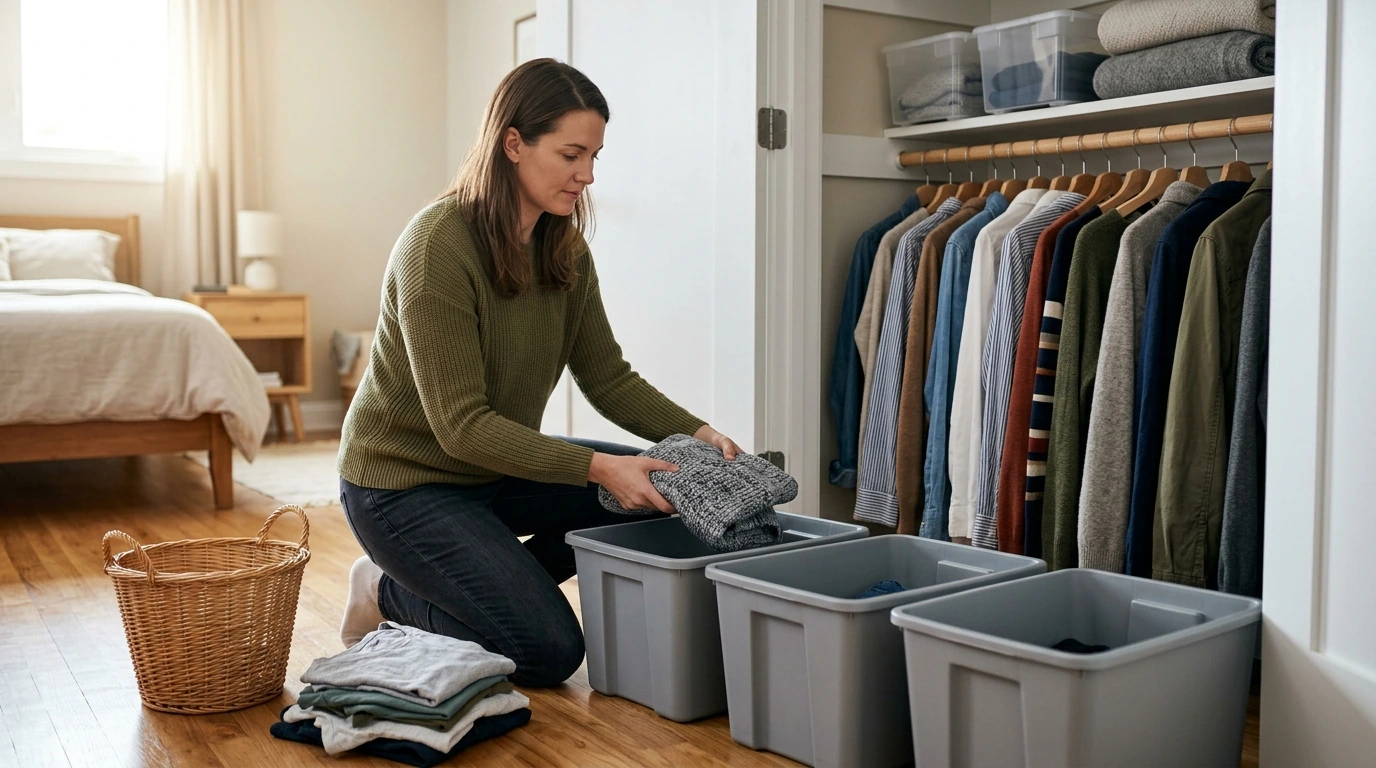
A Practical Kit for a Closet Cleanout: 10-in-1 Bundle for Decluttering Your Wardrobe
A closet cleanout goes faster when decisions, sorting, and storage happen in a clear order. This 10-in-1 bundle is designed to keep the process practical—helping with quick category sorting, space planning, and a simple system to maintain results after the reset.
If you’re ready to stop reorganizing the same piles and start using your closet like a tool, the goal is simple: fewer decisions, clearer zones, and repeatable habits.
When a closet cleanout stops feeling simple
- Too many “maybe” items: decision fatigue builds when everything is tried on twice.
- Not enough staging space: piles spread into the bedroom and never fully resolve.
- No clear categories: basics, occasion wear, and seasonal pieces get mixed together.
- Storage doesn’t match the wardrobe: the closet layout works against daily habits.
- Maintenance gap: the closet looks great for a week, then slides back to clutter.
What this 10-in-1 bundle helps you do
- Create a fast sorting workflow so every item lands in a clear next step.
- Measure and map closet space before buying more bins, hangers, or organizers.
- Set up zones (daily wear, work, occasion, seasonal, accessories) for easier mornings.
- Track what leaves the closet (donate, recycle, sell) to prevent “boomerang clutter.”
- Build a repeatable reset routine that can be done in short bursts (30–60 minutes).
To get started with the full system, see A Practical Kit for a Closet Cleanout – 10 In-1 Bundle for Decluttering Your Wardrobe.
What’s inside the kit and where each piece fits in the process
Use the components in three phases: plan (measure + map), decide (sort + evaluate), then maintain (labels + rules). The aim is a “one-pass closet”: handle each item once—keep, tailor, donate, sell, recycle, or store seasonally.
A simple rule that keeps the setup intuitive: pair categories with locations. Put the most-used items at eye level and within arm’s reach, and move special-occasion or seasonal items higher up or farther back.
Closet cleanout phases and how the bundle supports each step
| Phase | Goal | How the kit supports it | Time estimate |
|---|---|---|---|
| Plan | Know the space and constraints before organizing | Measure shelves/rods, sketch zones, set capacity limits | 15–30 min |
| Decide | Reduce volume and keep only what earns space | Sorting workflow, decision prompts, quick pile rules | 60–120 min |
| Set up | Assign homes for categories and prevent overflow | Zone planning, labeling, simple container rules | 30–60 min |
| Maintain | Keep the closet functional week to week | Reset checklist, seasonal swap schedule, incoming-item rule | 10–20 min/week |
A practical closet cleanout workflow (weekend-reset style)
- Step 1: Prepare a staging area: three bags/boxes for donate, sell, and recycle; one bin for “relocate to another room.”
- Step 2: Pull by category, not by shelf: do tops first, then bottoms, then dresses, then outerwear, then shoes/accessories.
- Step 3: Use fast rules to decide: fits now, worn in the last year, matches at least two outfits, and suits current lifestyle.
- Step 4: Handle “maybes” in a timed pass: cap maybes to a small number and revisit only once at the end.
- Step 5: Rebuild the closet in zones: daily core first, then work/occasion, then seasonal storage and special items.
- Step 6: Finish with a capacity rule: leave breathing room on rods and in drawers so new items don’t create instant clutter.
For donation and recycling basics, it helps to follow clear guidelines: check Goodwill Donation Guidelines for what’s typically accepted, and review the EPA’s Reduce, Reuse, Recycle resources for responsible next steps.
How to decide what stays: a realistic wardrobe filter
- Fit and comfort: keep items that feel good for a full day, not just in the mirror.
- Lifestyle match: align with real weeks—work needs, weather, errands, events, and downtime.
- Condition check: keep only what is cleanable, repairable, or worth tailoring; release items with permanent stains or damage.
- Duplicates and near-duplicates: keep the best version; let go of backups that never get chosen.
- Sentimental items: store separately in a small, labeled memory box instead of crowding daily clothing.
If you’re unsure whether something is salvageable, basic fabric and laundering guidance can help you decide whether to wash, spot-treat, repair, or retire it; see American Cleaning Institute: Clothing Care Basics.
Setting up the closet so it stays decluttered
If you like a printable structure for routines and “reset” checkpoints, pair the closet workflow with Master Amazon Subscribe & Save in 10 Easy Steps – Printable Checklist for Beginners as a general-purpose checklist format you can adapt for weekly and seasonal closet tasks.
Who this bundle suits best
FAQ
How long does a full closet cleanout usually take?
Most cleanouts take 2–4 hours for a standard closet, depending on how many items you own and how many decisions are “close calls.” If time is tight, split it into two sessions: decide (sort + bag up) first, then set up zones and labels later; maintenance can stay easy with a 10–20 minute weekly reset.
What should be done with clothes that might be worn again but aren’t being used now?
Use a limited-size “maybe” bin with a date label, and keep it small enough that it can’t silently grow. Re-check it in 60–90 days (or at the next season change), and keep only what you actually reach for when dressing for real life.
How can a decluttered closet be kept from getting messy again?
Keep simple constraints in place: capacity limits (fixed hangers or bin sizes), one-in/one-out for high-volume categories, and a donation bag that lives in the closet. Add a quick weekly reset and two seasonal swaps per year to stop clutter from rebuilding.
Recommended for you



Seasonal Home Maintenance Checklist (Spring–Winter)
Sep 27, 2026












Leave a comment