-
Shop
- Advanced Technologies
- AI Skills
- Apple Accessories
- Bathroom
- Best-Sellers
- Car Accessories
- Car Buying & Ownership
- Confidence
- Dating & Social Skills
- Digital Resources
- AI & Technology
- Beauty
- Electronics & Technology
- Emotional Intelligence
- Home Styling & Organization
- Kitchen & Recipes
- Mindfulness
- Mindset
- Online Business
- Parenting & Child Development
- Personal Style & Fashion
- Pet Lifestyle & Wellness
- Positive Thinking
- Productivity
- Self Confidence
- Sleep Improvement
- Smart Life with AI
- Stress Management & Relaxation
- Wellness
- Yoga & Mind-Body Practices
- Education & Learning
- Family & Parenting
- Fashion
- Furniture
- Gadgets
- Health & Beauty
- Health & Wellness
- Home & Garden
- Home Decor
- Home Electronics
- Jewelry
- Kids & Babies
- Kitchen
- Legend Footwear Brands Collection
- Lighting
- Nike
- Patio, Lawn & Garden
- Personal Growth
- Pet Care
- Pet Supplies
- Pets
- Smart Amazon Shopping
- Sport & Outdoors
- Travel
- Travel & Adventure
- Wealth
- Wealth Building
- Budgeting & Saving
- Cryptocurrency Investing
- Debt Management
- Entrepreneurship & Business Growth
- Family Finance & Budgeting
- Financial Independence
- Financial Mindset & Psychology
- Financial Planning
- Frugal Living & Expense Hacks
- Goal Setting
- High-Income Skills
- Investing Basics
- Leadership
- Motivation
- Networking & Mentorship
- Passive Income Strategies
- Real Estate Investing
- Side Hustles
- Stock Market Investing
- Popular
- Best deals
750W Electric Meat Slicer: Even Cuts for Meal Prep
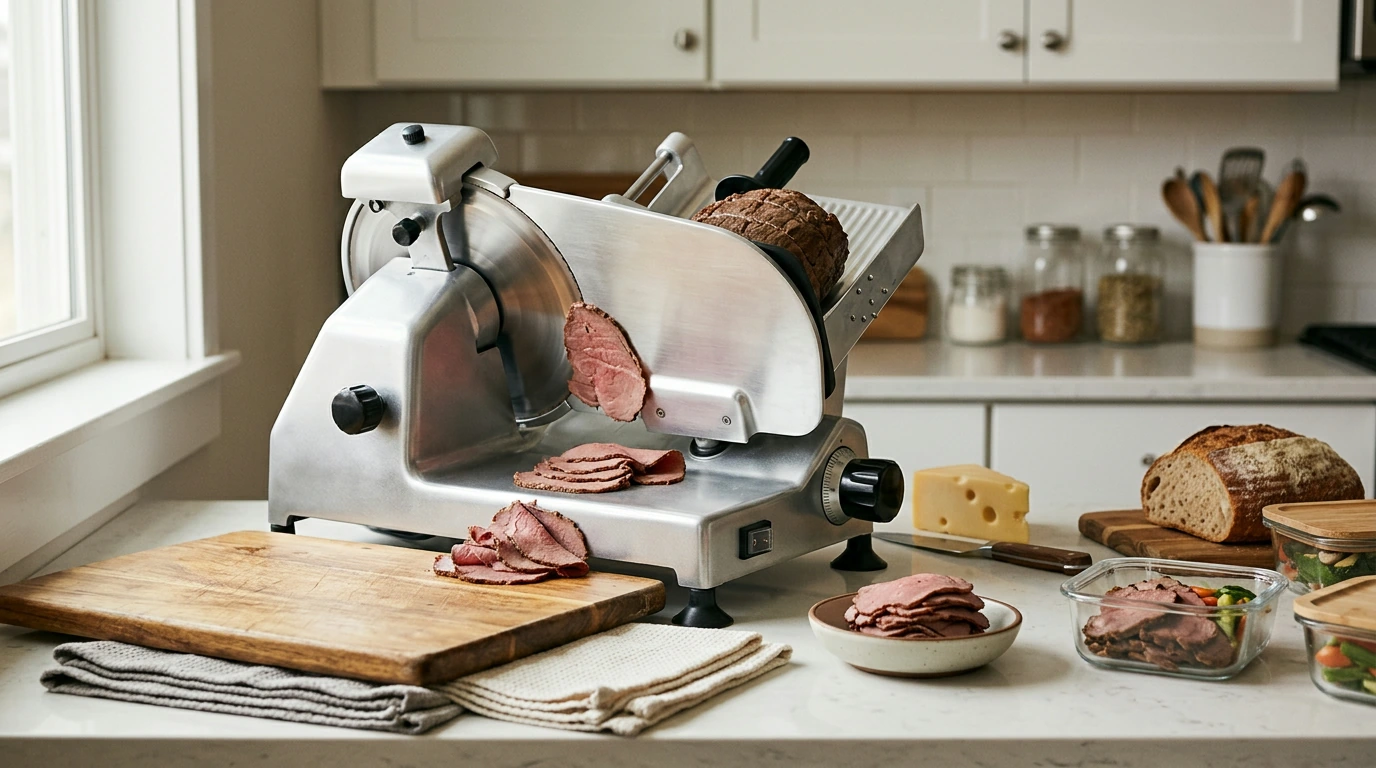
750W Electric Meat Slicer for Fast, Even Slices at Home
A high-powered electric meat slicer can turn big prep jobs—roasts, deli-style meats, cheese blocks, and bread—into quick, consistent slices with less waste. The right machine helps you portion meals for the week, build cleaner-looking charcuterie boards, and prep sandwich ingredients in minutes instead of wrestling with a knife and cutting board.
Below is a practical guide to what a 750W electric meat slicer is best for, which features matter most, and how to slice safely for smooth, even results. You’ll also find a quick product snapshot of the 750W Electric Meat Slicer and a few add-ons that make prep and serving feel more organized.
What a 750W electric meat slicer is best for
- Batch meal prep: Portioning cooked roasts, turkey breast, or ham for sandwiches, salads, and freezer packs.
- Charcuterie and entertaining: Uniform slices for platters that look professional and stack neatly without tearing.
- Cheese and bread slicing: Handling semi-firm cheeses and loaves when the blade is sharp and the feed tray supports the food properly.
- Reducing waste: Consistent thickness helps avoid “too thick” pieces that get re-trimmed or left behind.
- Time savings: Faster than hand slicing for large quantities, especially when preparing multiple items back-to-back.
High power is especially helpful when you’re slicing denser items (think chilled roast beef or firmer cheeses) and want steady motion that doesn’t bog down mid-cut.
Key features to prioritize in a 750W electric meat slicer
- Motor power and duty cycle: Higher wattage supports steadier slicing through dense meats; prioritize stable performance during longer prep sessions.
- Thickness adjustment: A smooth, easy-to-control dial or slider helps you move from thin deli slices to thicker sandwich cuts without guessing.
- Blade quality and size: A sharp stainless blade improves consistency and reduces tearing; larger blades generally handle bigger cuts more comfortably.
- Food carriage and pusher: A secure product holder keeps hands away from the blade and helps maintain even pressure.
- Base stability: Non-slip feet and a solid body reduce vibration, which can affect slice uniformity.
- Ease of cleaning: Removable blade/guard and wipe-friendly surfaces make it more likely the slicer gets cleaned promptly after use.
If you plan to use a slicer regularly, “easy to clean” isn’t a luxury feature—it’s what keeps the slicer in rotation instead of being relegated to a cabinet after two uses.
Product spotlight: 750W Electric Meat Slicer
For households that slice in volume—weekly meal prep, larger families, or frequent get-togethers—the 750W Electric Meat Slicer is a high-power option designed to make repetitive slicing faster and more consistent. It’s a practical fit for cooked meats, select cheeses, and other sliceable foods when they’re properly chilled and supported in the carriage.
For best results, chill meats before slicing, use steady pressure (let the blade do the work), and wipe away buildup when switching between fatty meats and cheese.
Quick snapshot
| Item | Details |
|---|---|
| Product | 750W Electric Meat Slicer |
| Power | 750W |
| Price | $665.01 USD |
| Availability | In stock |
How to get clean, even slices (without shredding or crumbling)
Uneven slices usually come from warm food, inconsistent pressure, or residue on the blade—not from “bad luck.” A few small habits can dramatically improve the finish.
- Chill before slicing: Cooked meats slice cleaner after resting in the fridge. Cheese behaves best when firm, not sweaty or room-temp soft.
- Trim and shape: Remove string, netting, and uneven ends; flatter surfaces ride the carriage more steadily and reduce wobble.
- Use the carriage pusher: Avoid “freehand” feeding. A pusher improves uniformity and keeps hands safer.
- Start slightly thicker: Once the first slices are stable, move thinner in small steps to reach deli-style results without tearing.
- Control moisture and residue: Wipe the blade/guard between fatty meats and cheese so slices don’t drag or smear.
- Stacking and storage: Layer slices with parchment for easy portions, refrigerate promptly, and label freezer packs with date and thickness.
A simple technique that helps: if a roast is irregular, slice it in halves and run the flatter side against the carriage. Better contact usually means more consistent thickness from slice one.
Safety and cleaning essentials
Electric slicers are efficient because the blade is fast and sharp. Treat setup, cleaning, and storage with the same respect you’d give a chef’s knife—plus the added caution of powered movement.
For general food-safety reminders on cleaning, temperature control, and avoiding cross-contamination, review guidance from the USDA Food Safety and Inspection Service and the FDA.
Practical add-ons for a more organized slicing setup
If you like a clean, cohesive setup for seasoning and topping after slicing, consider adding the Elegant Golden Glass Seasoning Jar with Lid – Kitchen Storage Solution to keep frequently used spices accessible and neatly contained.
FAQ
What can a 750W electric meat slicer cut besides meat?
Many people use a 750W slicer for semi-firm cheeses, bread, and other sliceable foods like firm vegetables. For cleaner cuts, chill the food first and use the carriage/pusher so the item stays stable as it meets the blade.
How thin can slices be on an electric meat slicer?
Slice thinness depends on the machine’s thickness adjustment range and your technique. Start with a slightly thicker setting to establish consistent slices, then dial down gradually to reach deli-style thin cuts without shredding.
How should an electric meat slicer be cleaned after use?
Unplug the slicer first, then remove and wash food-contact parts as allowed by the manufacturer and wipe down the body. Sanitize when needed, dry everything fully, and reassemble carefully so moisture and residue don’t build up over time.













Leave a comment