-
Shop
- Advanced Technologies
- AI Skills
- Apple Accessories
- Bathroom
- Best-Sellers
- Car Accessories
- Car Buying & Ownership
- Confidence
- Dating & Social Skills
- Digital Resources
- AI & Technology
- Beauty
- Electronics & Technology
- Emotional Intelligence
- Home Styling & Organization
- Kitchen & Recipes
- Mindfulness
- Mindset
- Online Business
- Parenting & Child Development
- Personal Style & Fashion
- Pet Lifestyle & Wellness
- Positive Thinking
- Productivity
- Self Confidence
- Sleep Improvement
- Smart Life with AI
- Stress Management & Relaxation
- Wellness
- Yoga & Mind-Body Practices
- Education & Learning
- Family & Parenting
- Fashion
- Furniture
- Gadgets
- Health & Beauty
- Health & Wellness
- Home & Garden
- Home Decor
- Home Electronics
- Jewelry
- Kids & Babies
- Kitchen
- Legend Footwear Brands Collection
- Lighting
- Luxury Brands Collection
- Nike
- Patio, Lawn & Garden
- Personal Growth
- Pet Care
- Pet Supplies
- Pets
- Smart Amazon Shopping
- Sport & Outdoors
- Travel
- Travel & Adventure
- Wealth
- Wealth Building
- Budgeting & Saving
- Cryptocurrency Investing
- Debt Management
- Entrepreneurship & Business Growth
- Family Finance & Budgeting
- Financial Independence
- Financial Mindset & Psychology
- Financial Planning
- Frugal Living & Expense Hacks
- Goal Setting
- High-Income Skills
- Investing Basics
- Leadership
- Motivation
- Networking & Mentorship
- Passive Income Strategies
- Real Estate Investing
- Side Hustles
- Stock Market Investing
- Popular
- Best deals
10–12 Minute Daily Stretching Routine for Beginners
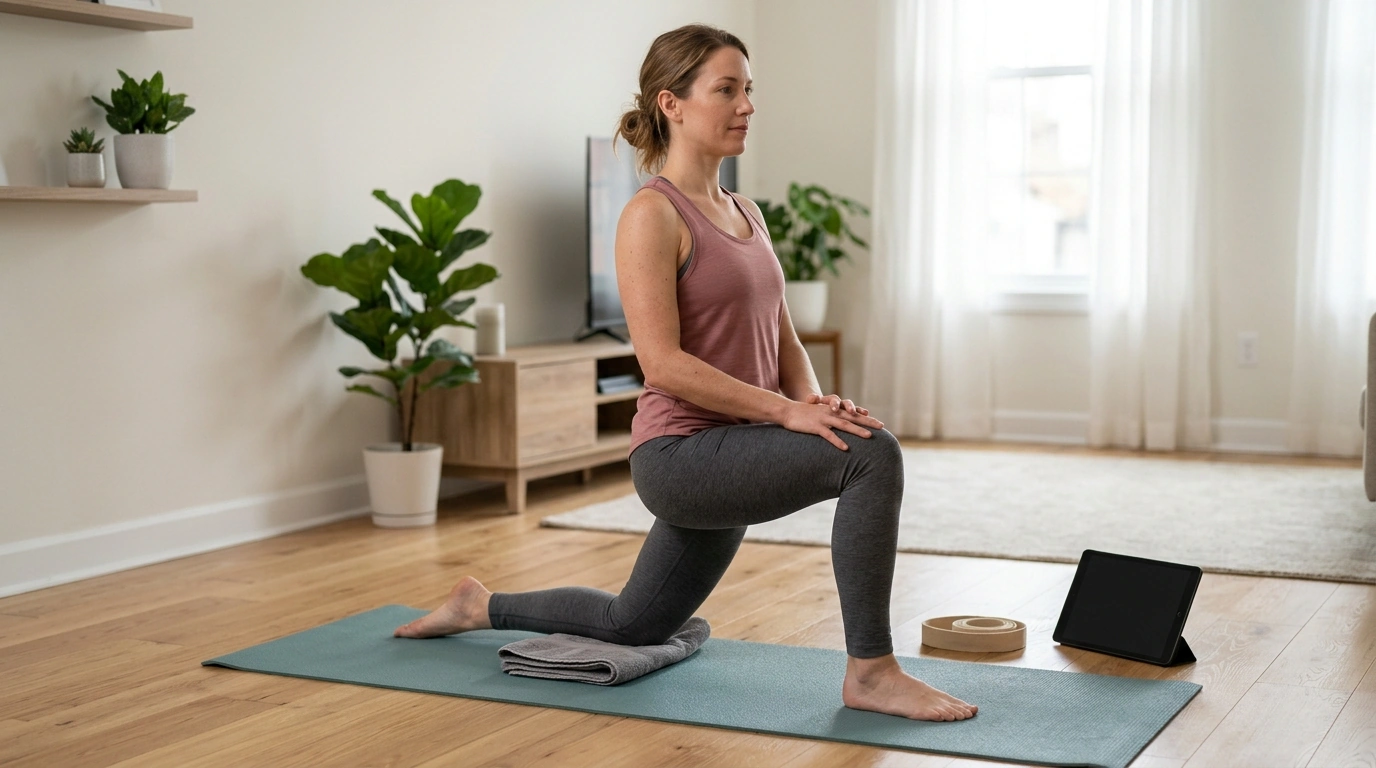
A consistent stretching habit can improve day-to-day comfort, joint range of motion, and how smoothly the body moves. The goal isn’t to “push deeper” every day—it’s to move with more control, less tension, and better repeatability. Below is a simple 10–12 minute routine built for beginners, plus safety checks and a progression plan that helps flexibility and mobility improve together.
What “stretching smarter” looks like for beginners
Stretching smarter starts with control. Move slowly, breathe steadily, and stop before anything sharp or “electric” shows up. A useful rule: aim for a mild-to-moderate stretch sensation—about a 3–5 out of 10—where you can still breathe calmly and relax into the position.
It also helps to separate two concepts:
- Flexibility: how much a muscle can lengthen.
- Mobility: how well you can use a range of motion with strength, coordination, and control.
Short daily sessions are often more effective than occasional long sessions. Keep the routine brief enough that it feels “too easy to skip,” then add time only after the habit sticks. Finally, do a little movement prep first so tissues feel warm and responsive rather than stiff and guarded.
Quick safety checks before starting
- Avoid bouncing into end ranges. Use smooth motion or gentle holds.
- Don’t do deep stretches on a cold body—start with 2–4 minutes of light movement (marching, arm circles).
- If a joint feels unstable, pinchy, or “caught,” reduce range and change the angle (stance width, toe angle, hand position).
- Stop and seek medical guidance if pain is sharp, radiating, or comes with tingling/numbness.
- Pregnancy, recent surgery, hypermobility, or acute injury may require modifications and professional guidance.
For additional general guidance on flexibility training, see reputable overviews from Mayo Clinic and Harvard Health Publishing.
The 10–12 minute daily routine (beginner-friendly)
1) Warm-up (2 minutes)
Keep it easy and rhythmic: march in place, do shoulder rolls, and add gentle torso turns. The goal is warmth and coordination, not fatigue.
2) Neck and upper back (1–2 minutes)
- Chin tucks: glide the head straight back (like making a “double chin”) without tipping up or down.
- Slow head turns: rotate side-to-side in a comfortable range.
- Open-book thoracic rotations: lie on your side with knees bent; rotate the top arm open with a small range at first.
3) Chest and shoulders (1–2 minutes)
- Doorway pec stretch: elbow below shoulder height; step through gently while keeping ribs “stacked.”
- Behind-the-back clasp: only if pain-free; keep shoulders down and avoid cranking the neck forward.
4) Hips (3 minutes)
Half-kneeling hip flexor stretch: kneel with one foot forward. Squeeze the glute on the back leg and gently shift forward while keeping ribs down (avoid low-back arching). Switch sides.
5) Hamstrings (2 minutes)
Supine hamstring stretch with towel/strap: lie on your back and loop a strap around the foot. Keep the knee slightly bent if needed and relax the ankle. If you feel tingling, reduce tension immediately.
6) Calves/ankles (1–2 minutes)
- Wall calf stretch: knee straight (gastroc), then knee bent (soleus).
- Slow ankle rocks: from a split stance, gently drive the knee forward over the toes without collapsing the arch.
7) Finish (1 minute)
Relaxed nasal breathing. Gently lengthen the exhale to help reduce overall muscle tone and “downshift” tension.
| Area | Move | Time / Holds | Form cue | Common mistake |
|---|---|---|---|---|
| Upper back | Open-book rotation | 5 slow reps/side | Rotate from ribs, not the low back | Forcing the shoulder to the floor |
| Chest | Doorway pec stretch | 20–30 sec/side | Shoulders down and back, ribs stacked | Overarching the low back |
| Hip flexors | Half-kneeling hip flexor | 20–30 sec/side | Squeeze back-side glute | Leaning forward without pelvic control |
| Hamstrings | Supine strap hamstring | 20–30 sec/side | Relax foot, slight knee bend OK | Pulling into nerve-like tingling |
| Calves | Wall calf stretch | 20–30 sec/side | Heel heavy, toes forward | Foot turned out, collapsing arch |
How to progress without overdoing it
- Week 1: Holds of 15–20 seconds. Prioritize breathing and alignment over depth.
- Week 2: Increase to 20–30 seconds per hold; add one extra round for the tightest area.
- Week 3: Add gentle contract-relax once per stretch: press lightly into the stretch for 5 seconds, relax, then ease slightly deeper.
- Week 4+: Add a few controlled mobility reps before holds (example: 5 hip rocks) so new range becomes more usable.
Track progress by comfort and function, not extreme positions: easier stairs, smoother squats, less stiffness after sitting, and fewer “first steps” aches in the morning.
Common beginner sticking points (and quick fixes)
Getting more structure: a simple guide to follow
- Stretch Smart: Bend Better, Move Freer — Beginner-Friendly Stretching eBook
- Screen Headaches Solved — eye strain relief and smart screen habits (helpful if tight neck/shoulders are fueled by long screen time)
- Master Amazon Subscribe & Save in 10 Easy Steps — Printable Checklist (a simple way to practice building a small daily routine with clear steps)
FAQ
How long should beginners hold a stretch?
Most beginners do well with 15–30 seconds per hold for 1–2 rounds. Keep the sensation mild to moderate and maintain steady breathing; increase time only when the position feels controlled and comfortable.
Is it better to stretch every day or a few times per week?
Short daily sessions often improve consistency and day-to-day comfort because the dose is small and repeatable. Stretching 2–3 times per week can still work, especially if recovery is a concern, but daily is usually easier for habit-building.
Should stretching be done before or after a workout?
Before a workout, prioritize dynamic mobility and light movement to prepare joints and tissues. Longer static holds are generally better after training or in a separate session; if you do static stretching beforehand, keep it brief and gentle.
Recommended for you


Vans Women’s Leather Shoes: Fit, Care & Pink Styling
Sep 14, 2026













Leave a comment