-
Shop
- Advanced Technologies
- AI Skills
- Apple Accessories
- Armani
- Bathroom
- Best-Sellers
- Calvin Klein
- Car Accessories
- Car Buying & Ownership
- Confidence
- Dating & Social Skills
- Digital Resources
- AI & Technology
- Beauty
- Electronics & Technology
- Emotional Intelligence
- Home Styling & Organization
- Kitchen & Recipes
- Mindfulness
- Mindset
- Online Business
- Parenting & Child Development
- Personal Style & Fashion
- Pet Lifestyle & Wellness
- Positive Thinking
- Productivity
- Self Confidence
- Sleep Improvement
- Smart Life with AI
- Stress Management & Relaxation
- Wellness
- Yoga & Mind-Body Practices
- Education & Learning
- Family & Parenting
- Fashion
- Furniture
- Gadgets
- Health & Beauty
- Health & Wellness
- Home & Garden
- Home Decor
- Home Electronics
- Jewelry
- Kids & Babies
- Kitchen
- Legend Footwear Brands Collection
- Lighting
- Luxury Brands Collection
- Nike
- Patio, Lawn & Garden
- Personal Growth
- Pet Care
- Pet Supplies
- Pets
- Smart Amazon Shopping
- Sport & Outdoors
- Travel
- Travel & Adventure
- Wealth
- Wealth Building
- Budgeting & Saving
- Cryptocurrency Investing
- Debt Management
- Entrepreneurship & Business Growth
- Family Finance & Budgeting
- Financial Independence
- Financial Mindset & Psychology
- Financial Planning
- Frugal Living & Expense Hacks
- Goal Setting
- High-Income Skills
- Investing Basics
- Leadership
- Motivation
- Networking & Mentorship
- Passive Income Strategies
- Real Estate Investing
- Side Hustles
- Stock Market Investing
- Popular
- Best deals
Indoor Plant Placement: Best Spots by Light & Room
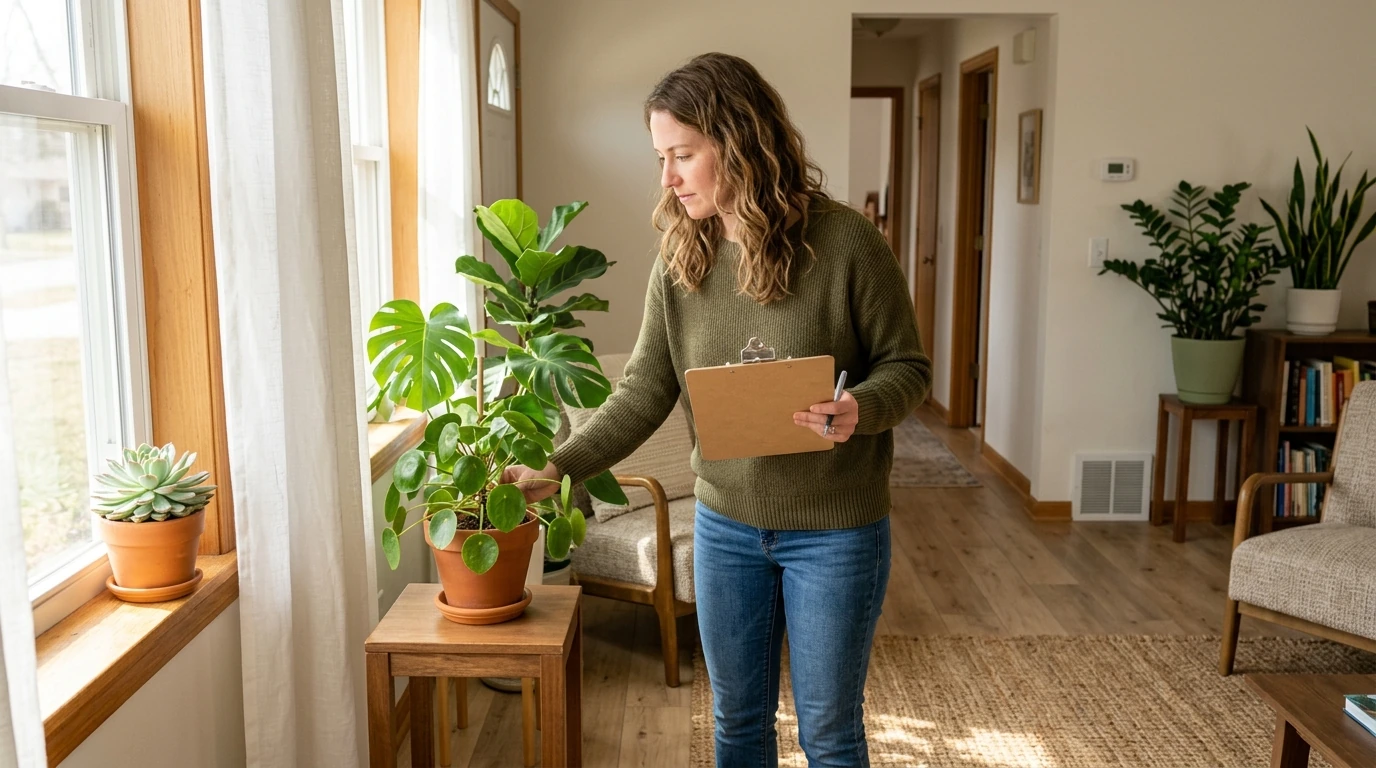
Find the Best Spots for Your Indoor Plants: An Easy Home Plant Placement Checklist
Healthy indoor plants start with smart placement. A “good-looking” corner isn’t always a good-growing corner—especially when drafts, vent blasts, or low winter light quietly slow growth. Use the room-by-room checklist below to match light, temperature, humidity, airflow, and daily habits to the right spot so plants grow steadily instead of merely surviving.
Start With a Quick Home Scan
Before moving anything, do a fast walkthrough and treat your home like a map of conditions. The goal is to find a few reliable “plant zones” you can reuse for many species.
- Identify window directions (north/east/south/west) and note obstructions like trees, awnings, deep overhangs, or nearby buildings.
- Observe light patterns for one full day: gentle morning sun, harsh afternoon sun, or consistent bright indirect light.
- Check for microclimates: drafts near doors, heat near radiators, dry air near vents, and humid pockets near kitchens/bathrooms.
- Choose care-friendly locations that fit daily routines—easy to water, easy to notice issues, and not in a trip zone.
Fast Placement Checklist (Print-and-Use)
| Factor | What to Look For | Good Placement Clues | Red Flags |
|---|---|---|---|
| Light | How bright and how long | Readable text comfortably without turning on a lamp; bright sky view | Direct sun scorching leaves; deep dim corners |
| Temperature | Stability across day/night | Most rooms staying ~65–80°F | Cold windows in winter; hot radiator shelves |
| Humidity | Dry vs. moist air | Bathroom/kitchen edges; grouped plants | Next to heating/cooling vents |
| Airflow | Gentle circulation, not blasts | Light, indirect movement of air | Strong drafts; constant fan/vent stream |
| Access | Watering + monitoring ease | Near a sink or watering station; visible from daily paths | Hard-to-reach shelves; behind curtains |
If you want a one-page version you can walk around with, the Find the Best Spots for Your Indoor Plants | Easy Home Plant Placement Checklist is designed for quick room scans and repeatable placements when seasons change.
Light: Pick the Right Window (and Distance From It)
Window direction is the simplest way to estimate light without a meter. Then fine-tune by adjusting distance—because light drops quickly as you step back from glass.
- East windows: gentle morning sun and bright midday light—often a dependable home base for many leafy plants.
- South windows (Northern Hemisphere): brightest, longest exposure—great for sun-lovers but may need a sheer curtain or a step back to prevent scorch.
- West windows: intense afternoon sun—best for tougher, high-light plants after slow acclimation.
- North windows: lowest light—best for shade-tolerant plants or plants placed close to the glass.
- Distance matters: shifting a plant just 2–3 feet away can noticeably reduce intensity and heat load.
Window Direction Guide (Typical Indoor Conditions)
| Window Direction | Typical Light | Best Use | Simple Adjustment |
|---|---|---|---|
| East | Bright, gentle morning sun | Most foliage plants; starter-friendly placements | Place 1–3 ft from glass if leaves pale |
| South | Strong, long-duration light | Succulents/cacti; flowering plants | Use sheer curtain; rotate weekly |
| West | Hot afternoon sun | High-light tolerant plants | Increase distance; avoid touching hot glass |
| North | Lower, indirect light | Shade-tolerant plants | Keep closer to window; consider a grow light |
For deeper houseplant care references (including light guidance and common issues), see the University of Minnesota Extension houseplant guides or the Royal Horticultural Society houseplant advice.
Room-by-Room Placement: Where Plants Tend to Thrive
Once you know your best windows and worst drafts, pick practical targets per room. Favor locations you’ll actually notice every day—healthy plants come from consistent observation as much as “perfect” conditions.
- Living room: bright, indirect spots; use stands to lift plants closer to light without blocking walkways.
- Kitchen: bright windowsills work well, but keep plants away from stove heat, greasy residue, and splash zones.
- Bathroom: ideal for humidity lovers if there’s a window; without one, treat it as a “bonus spot” only with added light.
- Bedroom: steady temperatures help; keep plants where curtains won’t brush foliage daily.
- Entryway: often drafty and dim—use hardy, low-light tolerant plants and keep them off the direct door-blast line.
- Home office: place plants in your peripheral vision for easy care; avoid direct AC flow during long work sessions.
Home office tip: if long screen sessions keep you planted at your desk, pairing a calmer setup with an easy plant spot can help you stick to routines. For comfort-focused habits beyond greenery, Screen Headaches Solved – A Practical Digital Guide to Headaches From Screen Overuse fits well alongside a “care-friendly” plant station.
Microclimates That Quietly Stress Plants
Many “mystery problems” are placement problems. A plant can get the right light but still decline if the spot runs hotter, colder, or drier than it seems.
A Simple Weekly Placement Routine
Printable Checklist: Find the Best Spots Faster
For a ready-to-use version, the Easy Home Plant Placement Checklist helps you record the top 2–3 candidate spots per room and reuse them whenever you rearrange.
FAQ
How can light levels be estimated without a light meter?
Use window direction, shadow sharpness, and whether you can read comfortably without switching on a lamp. Then confirm over 2–4 weeks by watching growth: compact growth suggests adequate light, while leggy stems and smaller leaves usually mean it’s too dim.
Is it okay to place plants directly on a windowsill?
Sometimes, but watch for hot glass and intense sun in summer and cold drafts in winter. Many plants do better slightly back from the glass where temperatures are steadier and light is still strong.
What’s the most common mistake when choosing a spot for indoor plants?
Picking a spot only because it looks nice, even though conditions are inconsistent (vent blasts, drafts, or dim corners). The next mistake is overwatering to compensate for slow growth caused by low light.












Leave a comment