-
Shop
- Advanced Technologies
- AI Skills
- Apple Accessories
- Armani
- Bathroom
- Best-Sellers
- Calvin Klein
- Car Accessories
- Car Buying & Ownership
- Confidence
- Dating & Social Skills
- Digital Resources
- AI & Technology
- Beauty
- Electronics & Technology
- Emotional Intelligence
- Home Styling & Organization
- Kitchen & Recipes
- Mindfulness
- Mindset
- Online Business
- Parenting & Child Development
- Personal Style & Fashion
- Pet Lifestyle & Wellness
- Positive Thinking
- Productivity
- Self Confidence
- Sleep Improvement
- Smart Life with AI
- Stress Management & Relaxation
- Wellness
- Yoga & Mind-Body Practices
- Education & Learning
- Family & Parenting
- Fashion
- Furniture
- Gadgets
- Health & Beauty
- Health & Wellness
- Home & Garden
- Home Decor
- Home Electronics
- Jewelry
- Kids & Babies
- Kitchen
- Legend Footwear Brands Collection
- Lighting
- Luxury Brands Collection
- Nike
- Patio, Lawn & Garden
- Personal Growth
- Pet Care
- Pet Supplies
- Pets
- Smart Amazon Shopping
- Sport & Outdoors
- Travel
- Travel & Adventure
- Wealth
- Wealth Building
- Budgeting & Saving
- Cryptocurrency Investing
- Debt Management
- Entrepreneurship & Business Growth
- Family Finance & Budgeting
- Financial Independence
- Financial Mindset & Psychology
- Financial Planning
- Frugal Living & Expense Hacks
- Goal Setting
- High-Income Skills
- Investing Basics
- Leadership
- Motivation
- Networking & Mentorship
- Passive Income Strategies
- Real Estate Investing
- Side Hustles
- Stock Market Investing
- Popular
- Best deals
Inflation Hedging Toolkit: Protect Purchasing Power

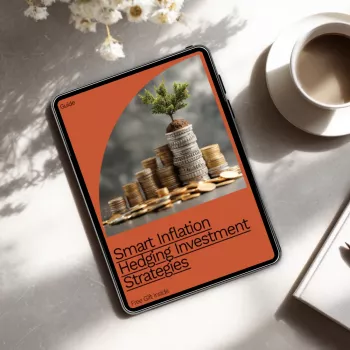
Smart Inflation Hedging Investment Strategies: a practical way to protect purchasing power
Inflation quietly raises the cost of everyday life—and it can just as quietly reduce the real value of savings and investment returns. A strong hedge is rarely a single “perfect” asset; it’s a set of choices that work together across different inflation environments (steady, spiking, and cooling). Our team built Smart Inflation Hedging Investment Strategies: A Comprehensive Guide to Safeguard Your Wealth to help you translate inflation headlines into clear portfolio actions without turning your plan into a complicated forecasting project.
How inflation erodes wealth in real life
Inflation risk shows up first in your household balance sheet—before it shows up in a chart. If you want your money to keep doing its job, the key is focusing on real outcomes, not just account balances.
- Real return matters more than nominal return: a 6% gain with 4% inflation leaves only a 2% real gain before taxes and fees.
- Inflation hits unevenly: food, energy, housing, healthcare, and tuition can rise at different rates, changing your monthly cash-flow needs.
- Cash is useful for stability: but excess cash is exposed to purchasing power risk when inflation stays elevated.
- Debt can be a hedge or a hazard: fixed-rate debt may be easier to repay in inflated dollars, while variable-rate debt can reprice higher quickly.
If you want a reference point for what the official data says, the U.S. Bureau of Labor Statistics CPI is a helpful baseline—but your personal “basket” may feel very different.
A simple inflation-hedging toolkit (what each option is designed to do)
Inflation hedging works best as a toolkit: each tool has a job, and no single tool is perfect in every regime. Here are the core building blocks many investors consider:
- Inflation-protected bonds: designed to adjust with inflation measures, helping protect purchasing power in a core fixed-income sleeve. (For details, see the U.S. Treasury overview of TIPS.)
- Short-duration bonds and cash alternatives: reduce interest-rate sensitivity and allow reinvestment at higher yields if rates rise.
- Equities with pricing power: businesses that can raise prices without losing customers often hold up better across long inflationary stretches.
- Real assets: real estate and infrastructure can benefit from replacement-cost dynamics and contractual escalators (depending on structure).
- Commodities: may track inflation spikes but can be volatile; often best as a measured diversifier rather than a “bet the farm” position.
- Gold and precious metals: historically used as a store-of-value hedge; results vary by regime and real interest rates.
| Option | What it can help with | Common trade-offs | Best role in a plan |
|---|---|---|---|
| Inflation-protected bonds (e.g., TIPS/I Bonds) | Purchasing power protection in the bond allocation | Can lag in disinflation; taxable-account considerations | Core stabilizer for inflation-aware fixed income |
| Short-term bonds / floating-rate exposure | Reducing rate risk; resetting to higher yields over time | Lower long-run yield potential than longer duration | Liquidity sleeve and rate-risk control |
| Quality equities with pricing power | Long-horizon growth that can outpace inflation | Short-term drawdowns; inflation shocks can compress valuations | Primary long-term inflation fighter |
| Real estate / infrastructure | Income linked to rents/usage; replacement-cost tailwinds | Interest-rate sensitivity; market cycles and location/sector risk | Income + diversification when sized appropriately |
| Broad commodities | Direct exposure to price increases during spikes | High volatility; can be flat for long periods | Tactical diversifier, not a core holding for many |
| Gold/precious metals | Store-of-value behavior in certain regimes | No cash flow; can underperform in strong growth/rising real rates | Small diversifier allocation |
Build an inflation-aware allocation without overengineering it
Our team uses a simple structure that keeps decisions tied to real-life spending needs:
Inflation regimes: match the strategy to the environment
You don’t need perfect predictions to build a resilient plan—you need a portfolio that can function across different inflation climates. If you want to explore long-term inflation trends, the St. Louis Fed’s FRED inflation series is a useful data library.
Practical steps to safeguard purchasing power (a checklist you can use)
Use the guide as a checklist: what our product helps you do
When you pick up Smart Inflation Hedging Investment Strategies, you get a step-by-step framework for building an inflation-aware plan you can actually maintain—without turning every CPI update into a portfolio overhaul. It’s designed to help you size hedges realistically, spot hidden concentration, and build rebalancing rules you can stick with.
If inflation stress is showing up as “screen stress,” our team also offers Screen Headaches Solved—a practical guide to reducing eye strain and improving screen habits, which can make it easier to review budgets, accounts, and plans without burning out.
FAQ
What is the simplest way to hedge inflation without taking extreme risk?
A layered approach is usually the simplest: keep diversified equities for long-run real growth, add inflation-protected bonds or shorter-duration fixed income for stability, and use small diversifiers (like real assets or commodities) only if they fit your risk tolerance.
Are inflation-protected bonds always better than regular bonds?
No—these bonds are designed to protect purchasing power, but they can underperform when inflation cools or when market expectations shift. The more durable approach is role-based: use them as part of your fixed-income sleeve rather than treating them as a permanent replacement for all traditional bonds.
How often should an inflation-hedging portfolio be rebalanced?
Many investors use either an annual schedule or a threshold rule (for example, rebalance when an allocation drifts by about 5% or more). Consistent rebalancing helps you avoid chasing recent winners and keeps your risk level aligned with your plan.















Leave a comment