-
Shop
- Advanced Technologies
- AI Skills
- Apple Accessories
- Armani
- Bathroom
- Best-Sellers
- Calvin Klein
- Car Accessories
- Car Buying & Ownership
- Confidence
- Dating & Social Skills
- Digital Resources
- AI & Technology
- Beauty
- Electronics & Technology
- Emotional Intelligence
- Home Styling & Organization
- Kitchen & Recipes
- Mindfulness
- Mindset
- Online Business
- Parenting & Child Development
- Personal Style & Fashion
- Pet Lifestyle & Wellness
- Positive Thinking
- Productivity
- Self Confidence
- Sleep Improvement
- Smart Life with AI
- Stress Management & Relaxation
- Wellness
- Yoga & Mind-Body Practices
- Education & Learning
- Family & Parenting
- Fashion
- Furniture
- Gadgets
- Health & Beauty
- Health & Wellness
- Home & Garden
- Home Decor
- Home Electronics
- Jewelry
- Kids & Babies
- Kitchen
- Legend Footwear Brands Collection
- Lighting
- Luxury Brands Collection
- Nike
- Patio, Lawn & Garden
- Personal Growth
- Pet Care
- Pet Supplies
- Pets
- Smart Amazon Shopping
- Sport & Outdoors
- Travel
- Travel & Adventure
- Wealth
- Wealth Building
- Budgeting & Saving
- Cryptocurrency Investing
- Debt Management
- Entrepreneurship & Business Growth
- Family Finance & Budgeting
- Financial Independence
- Financial Mindset & Psychology
- Financial Planning
- Frugal Living & Expense Hacks
- Goal Setting
- High-Income Skills
- Investing Basics
- Leadership
- Motivation
- Networking & Mentorship
- Passive Income Strategies
- Real Estate Investing
- Side Hustles
- Stock Market Investing
- Popular
- Best deals
Solo Drive Reset: Calm Stress, Lift Mood, Think Clearer

Quiet Miles, Clear Mind: A Solo Drive Reset for Stress, Mood, and Clarity
A short solo drive can function like a gentle reset button—lowering tension, easing emotional overload, and creating enough space to think clearly again. With the right structure, the combination of rhythmic motion, controlled stimulation, and intentional attention can support nervous-system settling and a steadier mood. The goal isn’t to “fix everything” on the road; it’s to feel more regulated than you did when you started, with one workable next step waiting for you when you park.
Why a Solo Drive Can Feel Calming So Quickly
When life feels loud—internally or externally—driving can offer a surprisingly fast shift. Part of the relief comes from predictable motion: a steady horizon, consistent road rules, and a repeating flow of small decisions can reduce sensory chaos and help your stress response settle.
A solo drive also creates privacy. With no one watching, needing reassurance, or reacting to your mood, the brain gets a break from social performance and constant micro-adjustments. Driving becomes a single, simple task that encourages “soft focus”—attention stays engaged, but not in a way that demands deep analysis. That soft focus often lets thoughts untangle on their own, without forcing them.
Even the environment change matters. Leaving the immediate stress context can weaken rumination loops that are tied to a specific room, desk, or conversation. Add small choices—route, temperature, volume, pace—and you get tiny but meaningful signals of control, which can counter helplessness and support a better mood.
The Nervous System Angle: From Overdrive to “Settled Enough”
Stress often shows up physically: shallow breathing, jaw clenching, tight shoulders, a braced belly, and racing thoughts. A drive works best when it includes cues that communicate safety to the body. That can be as simple as loosening your grip on the steering wheel and letting your shoulders drop at red lights.
Breath is one of the most direct tools. Longer exhales (without straining) can support a shift away from fight-or-flight activation toward a calmer parasympathetic state. If you want a deeper explanation of the body’s calming pathways, Cleveland Clinic’s overview of the vagus nerve and parasympathetic nervous system is a helpful reference: https://my.clevelandclinic.org/health/body/22836-vagus-nerve.
A solo drive isn’t a substitute for clinical care. It’s a practical, short-term stabilization tool—one that can help you regain enough steadiness to make safer, kinder decisions. For broader coping strategies, the National Institute of Mental Health offers guidance here: https://www.nimh.nih.gov/health/topics/caring-for-your-mental-health.
A Simple Solo-Drive Routine That Builds Clarity
1) Set the container before you start
2) Spend 3 minutes “arriving in the body”
3) Choose one intention
4) Use sound on purpose
5) End with a 2-minute decompression
Solo Drive Reset Plans for Different Needs
Quick Solo Drive Plans by Situation
| Situation | Drive length | What to do | What to notice afterward |
|---|---|---|---|
| Feeling wired, panicky, or overstimulated | 10–15 minutes | No phone. Quiet or steady music. Longer exhales at stoplights. Keep route simple. | Breathing depth, jaw/shoulder tension, urge to rush |
| Irritable or emotionally flooded | 20–30 minutes | Name the emotion once. Let thoughts pass without fixing them. Keep hands relaxed on the wheel. | Reduced intensity, more neutral tone, fewer sharp thoughts |
| Stuck on one decision | 15–25 minutes | Define the decision in one sentence. Generate 2–3 options only. Choose a “good enough for now” step. | Whether the body feels less tight with one option |
| Sadness, heaviness, low motivation | 20–40 minutes | Gentle music, daylight if possible. Add a small destination (coffee pickup, scenic spot). | Slightly more energy, willingness for one small task |
| Mental clutter after a busy day | 10–20 minutes | Silent drive. Mentally list what is done, what is pending, and what can wait. | A shorter, clearer to-do list; less rumination |
Safety and Boundaries That Make the Practice Actually Helpful
For more on how stress affects the body, the American Psychological Association provides a clear overview: https://www.apa.org/topics/stress/body.
Turning a One-Time Reset Into a Repeatable Mental Health Habit
Quiet Miles, Clear Mind: What the Ebook Helps You Do
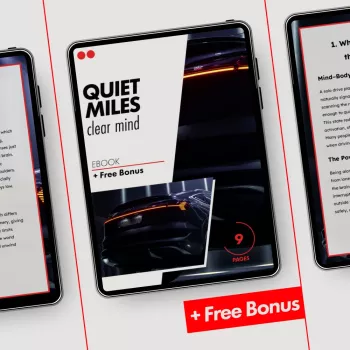
If you want a more structured version of this practice, Quiet Miles, Clear Mind – Ebook on the Mental Health Benefits of a Solo Drive | Calm Your Nervous System, Reset Your Mood, Find Clarity walks you through why solo drives can reduce overwhelm, how to calm without forced positivity, and how to build a practical “reset plan” for stress, irritability, decision fatigue, and mental clutter.
For days when your stress shows up as screen fatigue or eye strain—especially if you’re decompressing by scrolling—Screen Headaches Solved – A Practical Digital Guide to Headaches From Screen Overuse, Eye Strain Relief & Smart Screen Habits can help you set smarter screen boundaries so your reset doesn’t turn into another source of tension.
FAQ
How long should a solo drive be to feel calmer?
Many people feel a shift in 10–15 minutes for acute overstimulation, while 20–30 minutes can be better for a mood reset. For deeper decompression, up to 40 minutes may help—stop sooner if your attention drops or you feel unsafe to continue.
What if a solo drive turns into avoidance instead of helping?
A helpful drive ends with reduced intensity and one small next step; avoidance often looks like looping for hours and postponing essentials. Use a time limit, choose a low-stakes destination, and do one simple action after parking (water, a text you’ve been avoiding, or a 2-minute plan).
Is it better to drive in silence or with music?
Match sound to your state: silence can be best for mental clutter, while steady low-stimulation music often helps anxiety or agitation. If lyrics or high-tempo tracks spike rumination, switch to quieter audio or a simple instrumental playlist.















Leave a comment