-
Shop
- Advanced Technologies
- AI Skills
- Apple Accessories
- Armani
- Bathroom
- Best-Sellers
- Calvin Klein
- Car Accessories
- Car Buying & Ownership
- Confidence
- Dating & Social Skills
- Digital Resources
- AI & Technology
- Beauty
- Electronics & Technology
- Emotional Intelligence
- Home Styling & Organization
- Kitchen & Recipes
- Mindfulness
- Mindset
- Online Business
- Parenting & Child Development
- Personal Style & Fashion
- Pet Lifestyle & Wellness
- Positive Thinking
- Productivity
- Self Confidence
- Sleep Improvement
- Smart Life with AI
- Stress Management & Relaxation
- Wellness
- Yoga & Mind-Body Practices
- Education & Learning
- Family & Parenting
- Fashion
- Furniture
- Gadgets
- Health & Beauty
- Health & Wellness
- Home & Garden
- Home Decor
- Home Electronics
- Jewelry
- Kids & Babies
- Kitchen
- Legend Footwear Brands Collection
- Lighting
- Luxury Brands Collection
- Nike
- Patio, Lawn & Garden
- Personal Growth
- Pet Care
- Pet Supplies
- Pets
- Smart Amazon Shopping
- Sport & Outdoors
- Travel
- Travel & Adventure
- Wealth
- Wealth Building
- Budgeting & Saving
- Cryptocurrency Investing
- Debt Management
- Entrepreneurship & Business Growth
- Family Finance & Budgeting
- Financial Independence
- Financial Mindset & Psychology
- Financial Planning
- Frugal Living & Expense Hacks
- Goal Setting
- High-Income Skills
- Investing Basics
- Leadership
- Motivation
- Networking & Mentorship
- Passive Income Strategies
- Real Estate Investing
- Side Hustles
- Stock Market Investing
- Popular
- Best deals
Dry Faster, Safer: LED High-Velocity Pet Dryer Guide
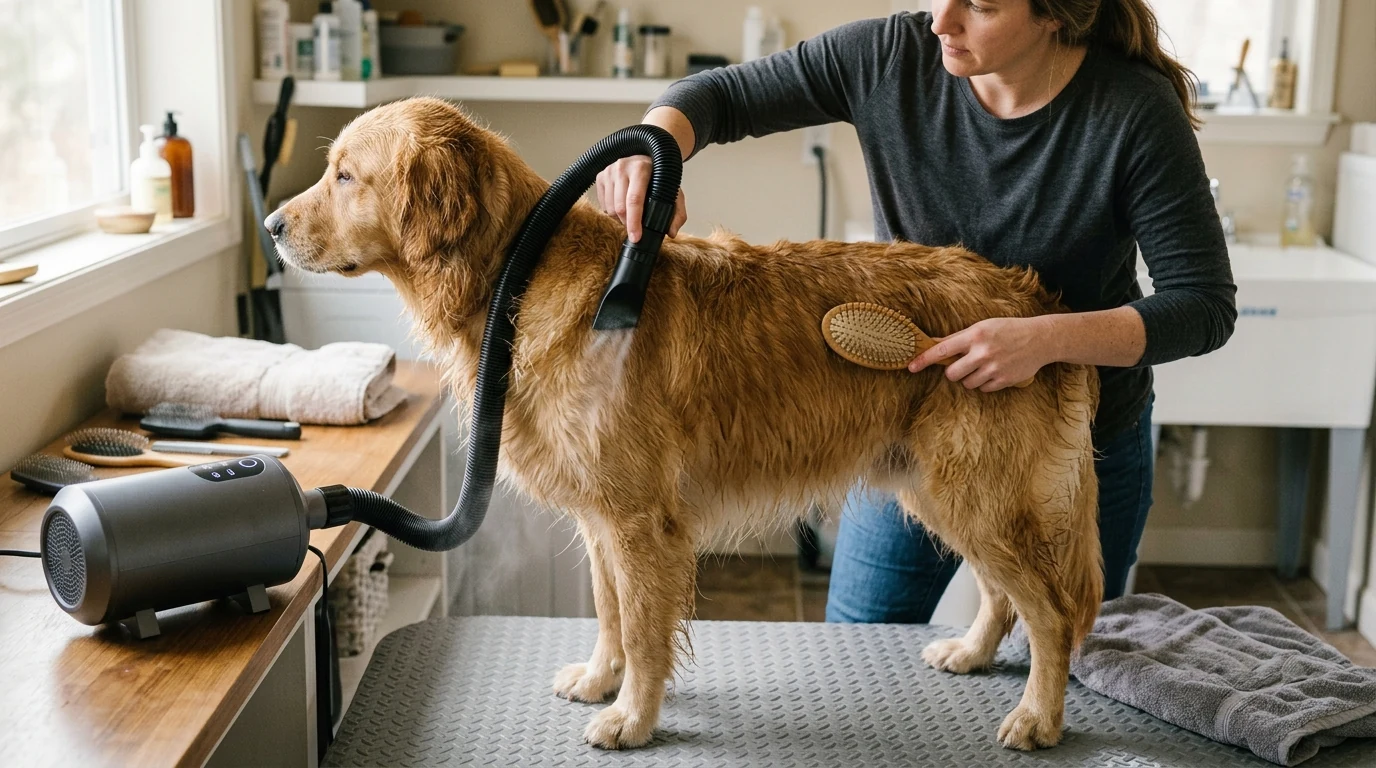
High-Velocity Drying That Prioritizes Airflow, Not Excess Heat
A high-velocity pet dryer can cut drying time, reduce lingering damp odors, and help fluff coats for a cleaner finish after baths. With an LED touch screen plus adjustable speed and temperature, dialing in a comfortable airflow for different coat types—without overheating sensitive skin—becomes much easier. The goal is simple: push water out of the coat efficiently, then use only the amount of warmth needed to finish dry, especially near the skin where moisture likes to hide.
For general coat care and at-home grooming basics, the American Kennel Club and ASPCA both offer helpful guidance on safe routines and handling: AKC Grooming and ASPCA Dog Grooming Tips.
What This Dryer Is Designed to Do
- Move a strong stream of air through the coat to push out water instead of relying only on heat.
- Support controlled drying for small pets, large dogs, double coats, and curly coats with adjustable speed.
- Help reduce matting by drying while brushing, especially in thicker coats.
- Offer quick, readable controls via an LED touch screen for changes mid-session.
High-velocity airflow is especially useful after a thorough towel dry, when the coat still holds water deep in the undercoat or close to the roots. Instead of “baking” damp fur from the outside, airflow helps separate the coat so moisture can escape.
Key Features That Matter During Real-World Drying
- LED touch screen control: quick adjustments without fumbling for dials, useful when one hand is holding a brush or stabilizing a nervous pet.
- Adjustable airflow speed: start low for face/ears and ramp up for body and dense areas like the chest, ruff, and hindquarters.
- Adjustable temperature: use minimal heat when possible and increase only as needed for comfort and efficiency.
- Consistent airflow for coat separation: helps lift water off the undercoat rather than trapping moisture near the skin.
- Better comfort management: speed and temperature control can reduce stress for noise-sensitive pets by avoiding a “full blast only” experience.
The practical win is flexibility mid-session. If your dog suddenly tenses when the airflow hits a sensitive area, you can drop speed or heat quickly, then ramp back up once they settle.
How to Use It: A Practical Drying Routine
- Prep first: towel-dry thoroughly; the more water removed by towel, the less time and heat needed.
- Start gentle: begin with low airflow and low heat (or no heat if available) to let the pet acclimate; keep the nozzle moving.
- Work in sections: back and sides, then legs, then tail; save face/ears for last with the lowest settings.
- Brush as you dry: for double coats and long coats, brushing while drying improves separation and helps prevent mats.
- Check skin temperature: if the air feels hot on the inside of the wrist, lower heat and/or increase distance.
- Finish cooler: end with a cool/low setting to settle the coat and reduce the chance of leaving warm, damp pockets near the skin.
Two small habits make a big difference: keep airflow moving (no “hot spotting”), and aim the air so it parts the coat rather than flattening it. When the coat separates, you’ll see water mist lift off instead of lingering underneath.
Picking the Right Settings by Coat Type
- Short coat: medium airflow, low heat; focus on moving water off the surface quickly.
- Double coat (husky, shepherd types): higher airflow, low-to-medium heat; work in layers to reach the undercoat without overheating.
- Curly coat (poodle mixes): medium airflow with controlled warmth; brush/comb while drying to avoid tight curls trapping moisture.
- Long coat: medium-to-high airflow; keep airflow moving to prevent tangles and concentrate on roots where moisture lingers.
- Puppies, seniors, and sensitive skin: start on the lowest airflow/temperature and increase gradually only if the pet stays comfortable.
Suggested Settings Guide (Adjust Based on Pet Comfort)
| Coat type | Airflow | Temperature | Technique tip |
|---|---|---|---|
| Short/smooth | Medium | Low | Keep the nozzle moving; finish quickly with a towel pass |
| Double coat | High | Low–Medium | Dry in layers; brush to open the undercoat |
| Curly/wavy | Medium | Low–Medium | Brush while drying to prevent mats and tighten curl clumps |
| Long/silky | Medium–High | Low | Work from roots to ends; avoid blasting tangles |
| Sensitive (puppy/senior) | Low | Low | Increase slowly; use more distance and frequent breaks |
Comfort and Safety Checklist
Who This Dryer Fits Best
Product Details at a Glance
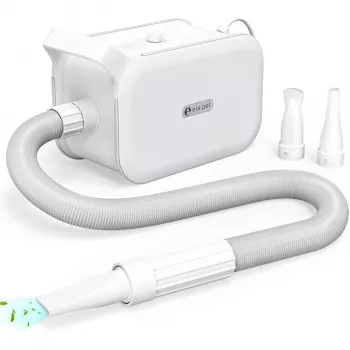
- Name: High-Velocity Pet Dryer with LED Touch Screen and Adjustable Speed & Temperature
- Availability: in stock
- Price: $586.01 USD
- Use case: faster drying with adjustable airflow and heat for comfort across coat types
More In-Stock Picks (Also Available)
- Elegant Golden Glass Seasoning Jar with Lid – Kitchen Storage Solution
- Screen Headaches Solved – A Practical Digital Guide to Headaches From Screen Overuse, Eye Strain Relief & Smart Screen Habits
FAQ
Is high-velocity airflow safer than high heat for drying pets?
High-velocity airflow removes water by pushing it out of the coat, which often reduces how much heat you need. Use the lowest effective temperature, keep the nozzle moving, and check comfort often so the skin never feels overly warm.
How long should it take to dry a dog with a thick or double coat?
Many thick or double coats take roughly 20–45 minutes depending on towel prep, coat density, and whether you brush while drying. Drying in sections and opening the undercoat with a brush can noticeably shorten total time.
Can the dryer be used around a dog’s face and ears?
Yes, but use the lowest airflow and low/no heat, increase your distance, and avoid directing air into the ear canals. Short passes with breaks can help anxious dogs stay calm while you finish sensitive areas.













Leave a comment