-
Shop
- Advanced Technologies
- AI Skills
- Apple Accessories
- Armani
- Bathroom
- Best-Sellers
- Calvin Klein
- Car Accessories
- Car Buying & Ownership
- Confidence
- Dating & Social Skills
- Digital Resources
- AI & Technology
- Beauty
- Electronics & Technology
- Emotional Intelligence
- Home Styling & Organization
- Kitchen & Recipes
- Mindfulness
- Mindset
- Online Business
- Parenting & Child Development
- Personal Style & Fashion
- Pet Lifestyle & Wellness
- Positive Thinking
- Productivity
- Self Confidence
- Sleep Improvement
- Smart Life with AI
- Stress Management & Relaxation
- Wellness
- Yoga & Mind-Body Practices
- Education & Learning
- Family & Parenting
- Fashion
- Furniture
- Gadgets
- Health & Beauty
- Health & Wellness
- Home & Garden
- Home Decor
- Home Electronics
- Jewelry
- Kids & Babies
- Kitchen
- Legend Footwear Brands Collection
- Lighting
- Luxury Brands Collection
- Nike
- Patio, Lawn & Garden
- Personal Growth
- Pet Care
- Pet Supplies
- Pets
- Smart Amazon Shopping
- Sport & Outdoors
- Travel
- Travel & Adventure
- Wealth
- Wealth Building
- Budgeting & Saving
- Cryptocurrency Investing
- Debt Management
- Entrepreneurship & Business Growth
- Family Finance & Budgeting
- Financial Independence
- Financial Mindset & Psychology
- Financial Planning
- Frugal Living & Expense Hacks
- Goal Setting
- High-Income Skills
- Investing Basics
- Leadership
- Motivation
- Networking & Mentorship
- Passive Income Strategies
- Real Estate Investing
- Side Hustles
- Stock Market Investing
- Popular
- Best deals
Mindful Solo Travel Guide: Plan Calmly With AI Help
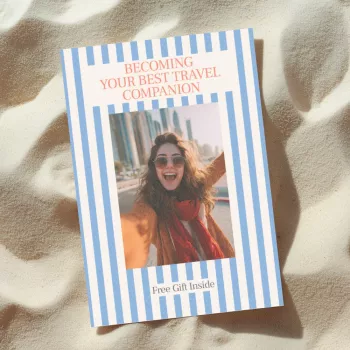
Becoming Your Best Travel Companion: A Solo Travel Guide for Mindful, Independent Adventures (with AI Tools That Actually Help)
Solo travel gets easier—and more meaningful—when the most reliable companion is the one you always have: you. Our digital guide is built for independent travelers who want both freedom and steadiness on the road: practical planning, mindful routines, and smart ways to use AI tools for solo travel without feeling like a robot following instructions. Use it to plan with confidence, move through unfamiliar places calmly, and turn small moments into the kind of memories that last.
Who this guide is for (and what it supports)
If any of these sound like you, our team designed this download with your real travel days in mind:
- First-time solo travelers who want structure without losing spontaneity
- Independent travelers who prefer thoughtful, low-stress planning over overpacked itineraries
- Travelers who want mindful habits for transitions: airports, check-ins, quiet evenings, culture shifts
- People curious about AI tools for solo travel—especially for planning, language help, navigation backups, and decision fatigue
- Anyone who wants a repeatable system for feeling safe, grounded, and capable on the go
Get the full download here: Becoming Your Best Travel Companion | Solo Travel Guide (Digital Download).
What “being your own best travel companion” looks like in real life
It’s not about being fearless or flawlessly organized. It looks like small, consistent choices that keep you steady:
- A calmer start: decisions made ahead of time, essentials pre-checked, key info saved offline
- A steady middle: flexible plans, simple routines, and small self-checks to reduce stress spikes
- A kinder inner voice: replacing “I should be doing more” with “I’m here; I’m present; I’m learning”
- More enjoyment: fewer frantic searches and last-minute pivots; more intentional wandering
- Better choices: food, sleep, pacing, and boundaries that match your energy (not someone else’s travel style)
Plan the trip so the trip doesn’t run you
When you travel solo, “simple” beats “perfect.” These are the planning moves that protect your energy and attention:
- Create a “must-do / nice-to-do / if-I-feel-like-it” list to prevent itinerary overload
- Build a simple daily rhythm: one anchor activity, one flexible block, one recovery block
- Use pre-departure checklists for documents, payments, and backups (digital + physical)
- Set safety defaults: arrival timing, transportation rules, and a quick check-in routine
- Prepare a mini “decision menu” for meals and evenings to avoid decision fatigue when you’re tired
For official prep reminders, you can also reference the U.S. Department of State — Traveler’s Checklist and the CDC — Travelers’ Health (Destinations).
AI tools for solo travel: helpful prompts, not a replacement for your judgment
Used well, AI can lower your planning load and reduce the “What should I do next?” spiral. Used poorly, it can nudge you into overly ambitious days or outdated info. Our approach is simple: let AI draft, then you decide.
- Use AI to generate a draft plan, then refine it with your pace, budget, and interests
- Ask for neighborhood-based suggestions with constraints (walkable, daylight-friendly, quiet, vegetarian, etc.)
- Create message templates for common situations: late check-in, tour questions, lost item, simple medical needs
- Draft language practice snippets and polite phrases for the destination
- Use AI to summarize long transit rules, baggage policies, or museum info into a quick checklist
- Keep privacy in mind: avoid sharing passport numbers, booking IDs, or sensitive personal details
Quick AI Prompt Bank for Solo Travel Moments
| Moment | Prompt to Use | What to Check Before You Follow It |
|---|---|---|
| Landing late | “Make a step-by-step arrival plan from airport to hotel for a solo traveler arriving at 10:30 pm, prioritizing safety and simplicity.” | Verify transport hours, official taxi/rideshare zones, and hotel check-in rules |
| Choosing a neighborhood | “Compare 3 neighborhoods for a solo traveler who wants walkability, cafés, and low-noise evenings.” | Cross-check with maps, recent reviews, and distance to transit |
| Day planning | “Build a relaxed 1-day itinerary with one museum, one park, and local food, including rest breaks.” | Confirm opening hours, reservation needs, and realistic travel times |
| Feeling overwhelmed | “Give me a 15-minute reset routine for travel anxiety that I can do in a hotel room.” | Choose what fits medically and emotionally; keep it gentle |
| Language help | “Write 5 polite phrases for asking directions and ordering food, with pronunciation tips.” | Confirm accuracy with a reputable translation app and keep it simple |
Mindful adventures: simple practices that fit real travel days
Mindfulness doesn’t need candles, silence, or an hour-long routine. It needs a tiny “return point” you can use anywhere.
If your planning and navigation time spikes your screen use (and headaches), pair this with our digital guide: Screen Headaches Solved – A Practical Digital Guide to Headaches From Screen Overuse.
Solo safety and confidence without fear-based travel
How to use the digital download for maximum value
A simple 7-day pre-trip routine (built for calm, not perfection)
FAQ
Is this guide better for first-time solo travelers or experienced travelers?
It works for both. If you’re new to solo travel, you get structure, checklists, and confidence-building routines; if you’re experienced, you get a repeatable system plus AI ideas that can cut planning time and reduce decision fatigue.
What do I need to use the AI tools in the guide?
You just need a phone or laptop and access to an AI assistant plus everyday travel tools like maps and translation. Keep privacy basics in place and verify key details (hours, rules, routes) with official or up-to-date sources.
Can this be used for weekend trips as well as longer travel?
Yes—the framework scales easily. For a weekend, you’ll use a lighter version of the checklists and daily rhythm; for longer trips, you’ll add more backups, rest planning, and a deeper prompt bank.













Leave a comment